

How to Become a Better Scorer
When you watch the most prolific scorers, the one constant you will notice is that they are rarely, if ever, sped up. Understanding the importance of pace as a scorer is something that can have an instant impact on your game and ability to score.
So what are some practical ways that you as a player can improve in this area? Here are 3!
ROLL THE TAPE..
If you are a film watcher, take a look at a few of your games and pay close attention to each moment that you are going full speed at times that it’s not required or bringing value to your play. Evaluate the decisions you’re making when you are playing at that pace and track the efficiency of those decisions each time you touch the ball.
GET THE CONES OUT..
Cones are a great way to give you a visual as you are beginning to work on your pace/change of speed. Set them up in a line like the video below and use your imagination from there.
Work on going from slow to fast and from fast to slow and everything in between. Get your body used to changing speeds while remaining in good balance.
PRACTICE PRACTICE PRACTICE..
Whether you have access to open runs or a buddy you can get on the court and play one on one with, both are good for experimenting. In one on one it’s a great way to feel how you can control your defender with your different speeds.
During a pick up session it’s great to feel yourself control your defender but also to be able to recognize how that change of speed impacts secondary defenders off the ball.
The final piece of advice is to watch as much basketball as you can. Find a player that you feel your game relates most to and study them.
Watch how they move.
Pay attention to what they do with and without the ball.
Study how they score and find ways to improve your game in those areas.
All of the information you need is out there but keying in on what applies directly to your game/abilities is often what trips players up.
So don’t waste your time working on skills that won’t translate into your game’s DNA.
Be honest with yourself, know your strengths, know your weaknesses and own it.
The quicker you can figure these things out, the quicker you will be on the right track to reach your potential as a scorer.

How to Build Team Culture
Today, with the reality of the uprise in anything from high school/college transfers to coach investigations, it’s clear why culture is the new buzzword.
There’s a lot of great advice out there that gives plenty of solutions in ways to establish and/or improve your team’s culture but let’s focus on one that is not only practical in its application but also whether you’re a head coach, an assistant or a player it will benefit your program.
Everything that is strong starts with the foundation and when it comes to culture, that foundation is trust. It’s the foundation of every successful team no matter what sport, company or relationship.
Let’s look at it from on 3 levels…
HEAD COACHES > ASSISTANTS > PLAYERS

Starting from the top. Your staff’s ability to work together can make or break a team. The trust from the head coach to the assistants is crucial.
Some coaches feel the need to do a little more micro managing and direct every aspect of the team through the assistants. If this is how you run your program, it may work for you but it doesn’t exactly exemplify trust.

Trust can be displayed by head coaches releasing that control. By allowing assistants to take ownership in important areas it allows for their growth as a coach while empowering them to be more productive and feel more valued as a staff member.
When you are relied upon as an assistant in this way, you take on a completely different mentality when it comes to your work. As difficult as it may be to relinquish that control, in the long run if you’ve hired the right people it will pay off.

I can’t say enough about the impact this has on players. Players recognize when it’s a one man/woman show and it’s often reflected in their respect of the assistants.
By giving your staff more trust, you are creating extensions to your players that you on your own wouldn’t be able to achieve.

Finally for the head coaches direct trust with the players, ask them questions! There is nothing better than feeling like your head coach values your opinion as a player. It not only builds trust but it also disarms players and puts them in a less defensive mindset when it comes to receiving your feedback/criticism.
ASSISTANTS > HEAD COACHES > PLAYERS
This trust goes both ways...Assistants have to also show trust in their head coach. It’s a normal thing to disagree with your head coach and debate but once a decision is made, it is important that you are on board regardless of your opinion.
You’re all on one boat that has the goal of going one direction. If assistants aren’t paddling in the same direction the result will be a negative one no matter who is right or wrong.

When you can disagree with your head coach in a meeting but display on the court, in front of your team that you are all on the same page as a staff, it gives your head coach more trust in you and allows for the respect in that relationship to grow.
When it comes to players, the reality is that they are very much in tune to the state of the staff’s relationship. They quickly pick up on rifts and it becomes the hot topic of the locker room, which is the exact opposite of where you as a coach would like for their focus to be.
PLAYERS > ASSt./HEAD COACH > TEAMMATES
For players, teams typically designate leadership at the beginning of the season. Regardless of your position, age or experience you can have an impact.
Communication is number one when it comes to building trust with your coaches but it’s equally as important with your teammates. When it comes to players and coaches, you want to make sure that there is a clear understanding to your role on the team.
You have to be on the same page with your coach to have the best chance to make an impact.

As for your teammates, your communication is key in that you are POSITIVE. This is a very important aspect of building trust among teammates.
If you can challenge yourself to build up your teammates on a daily basis and not succumb to the temptation of the gossip/negativity in the locker room you are guaranteed to gain the trust of your teammates.
When others can see the impact that you have with a positive mindset, it’s natural for those habits to ripple through your team and for them to follow.
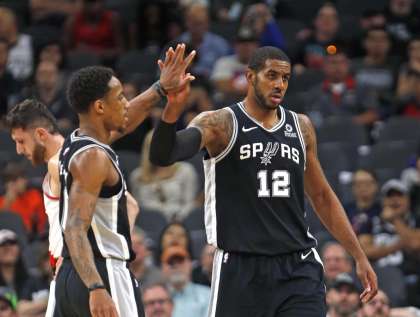
Everyone wants to have a great culture and win games, unfortunately there isn’t just one easy fix, but if you’re going to start somewhere, start with trust.